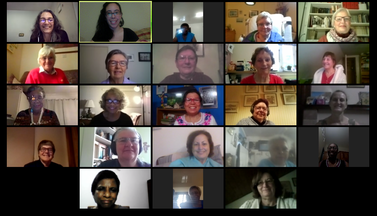
 Let's Talk with WDP Vanuatu, Oct 23, 2020 Let's Talk with WDP Vanuatu, Oct 23, 2020 As preparations for the 2021 Vanuatu WDP celebration started in many countries, WDPIC held an online conversation with WDP Vanuatu on October 23, 2020. Across 7 regions, 26 participants from 13 WDP committees came to the "Let's talk with Vanuatu" meeting. The sisters in Vanuatu reflected on the 2021 theme "Build on a Strong Foundation" and informed on issues of child malnutrition, violence against women, the impact of COVID-19 on the islands and their plans for WDP 2021. Annette Poitier, WDP Bahamas, was invited to offer the opening prayer, to which she responded with appreciation for being part of a group that prays. In her prayer, she thanked all for being together from different time zones, and affirmed that we know that we are standing on a firm foundation when we are standing on prayer. “Build on a Strong Foundation, it is really an exciting theme. When we think about it, we automatically switch to our country motto ‘In God we stand’. Without God we can do nothing. Our country’s development after 40 years of independence reflects our belief that in God, we stand. In these uncertain times, the theme becomes very relevant to the world and to us. We hope that all will build their foundation on God alone, and then all things will be added,” affirmed Cindy Vanuaroro, from WDP Vanuatu. Through the country background information and the worship service’s prayers, we learned about some of the challenges in Vanuatu, to which Ruth Dovo, WDP Vanuatu, offered some updates. According to Ruth, Vanuatu is experiencing a double disaster: the COVID-19 pandemic and the aftermath of Category 5 Cyclone Harold that hit the islands in April 2020. The cyclone season is from October to March, and although the people are resilient and prepared for the season, sometimes the destruction is more than what was anticipated. Now, the communities affected are recovering thanks to the support of organizations and churches. Vanuatu is rich in natural resources like the fertile land and ocean, but some children may face malnutrition. This could be addressed with parental education, to help the families understand how to feed the children well. The COVID-19 pandemic has greatly impacted the tourism industry leaving many unemployed. All the frustrations caused by this economic situation can be seen in the rise of domestic violence. That being said, this situation has also created an opportunity for Vanuatu to go back to its agricultural roots. Now, everybody is farming and gardening because it is not known when the COVID-19 situation will be finished. People are encouraged to have their own gardens for their own consumption and for commercialization. When, Pollyanna Banga, WDP Vanuatu, last visited her home island, she got very excited. She comes from one of the islands where a volcano erupted and the people were evacuated. They are coming back and settling down, and women and young people are gardening. They started to plant again, and now they are harvesting the crop and living on that. “It is a good thing,” said Pollyanna joyfully. Ruth Dovo is grateful for the government task force’s response to COVID-19. One of the issues they dealt with was the repatriation of seasonal workers from Australia and New Zealand, who had to quarantine for 14 days. The policy may have contributed to Vanuatu being considered COVID-19 free, which is very important, as the medical facilities are too limited to deal with an outbreak. WDP committee representatives of Australia and New Zealand expressed their concern with the impact of the country’s closing borders to the seasonal workers from Vanuatu, whose families depend on them. In regards to plans for the celebrations in 2021, WDP Vanuatu created a working committee to organize several workshops for the empowerment of women, the worship service, a festive parade, and a big lunch with cultural performances. “Vanuatu is a Christian country,” continued Ruth, “so women in the church come to assist with prayers and support. We go through different challenges all the time, but we believe in God and know we are not alone. God is with us.” In the midst of the uncertainties, one thing we can say for sure, "we are covering Vanuatu in our prayers," concluded Janice Soyer-Delaney, from WDP Tobago. WDPIC thanks everyone who participated in the conversation, which was adjourned with Ruth reciting the Lord’s Prayer in her mother tongue from the Pentecost Island. Watch a video summary on our Youtube channel! - Rosângela S. Oliveira, WDPIC Executive Committee
4 Comments
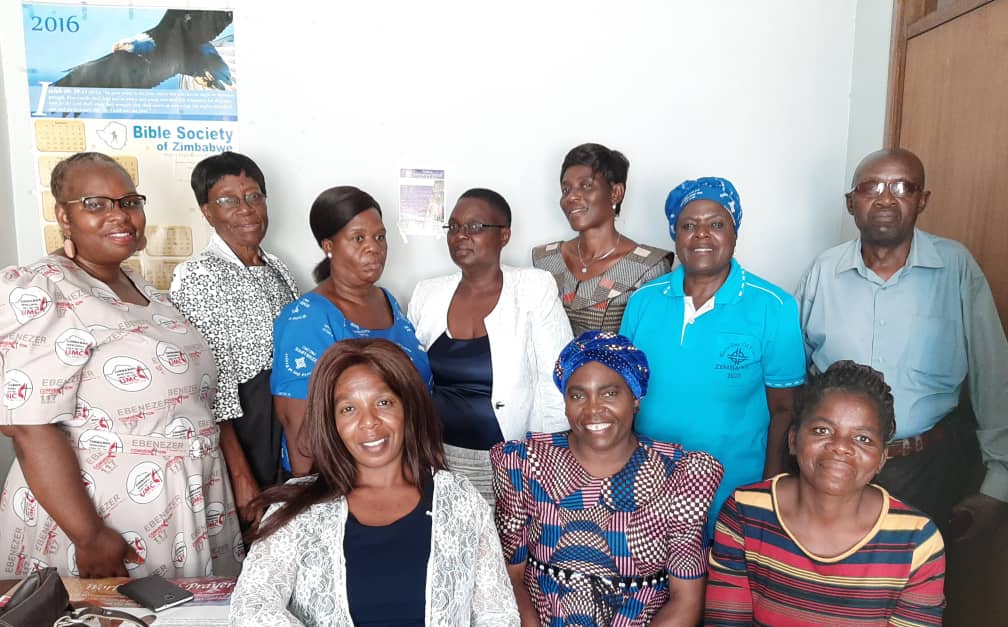
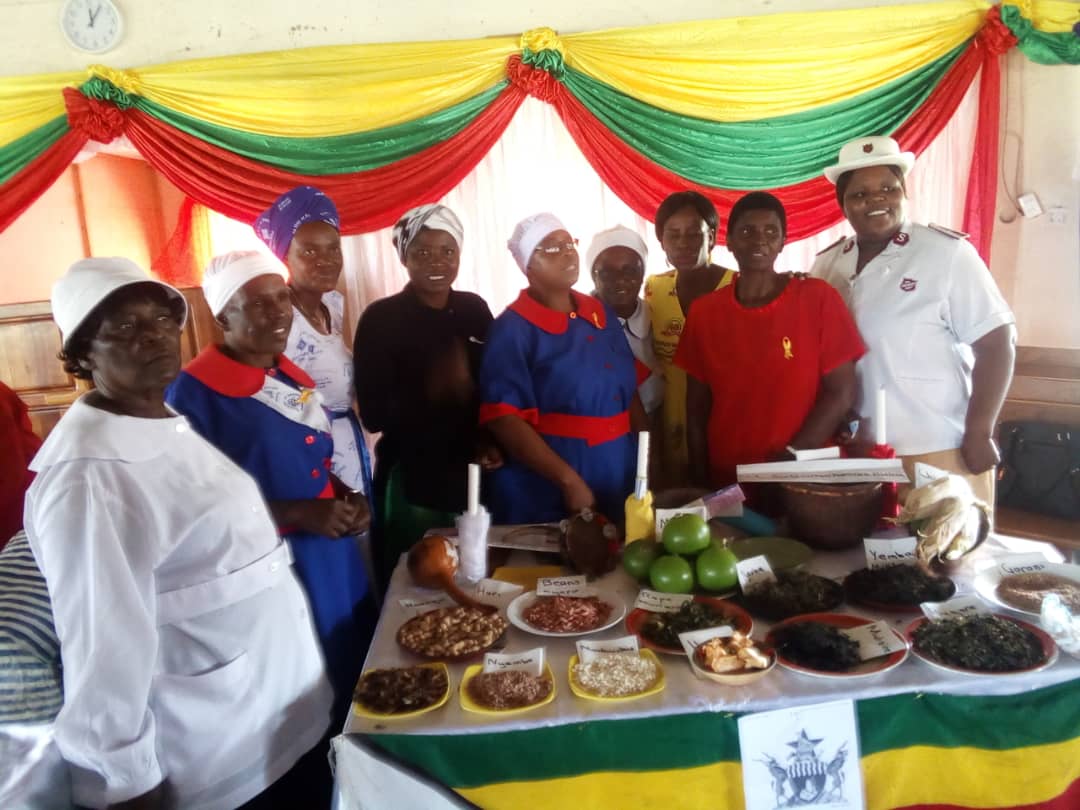
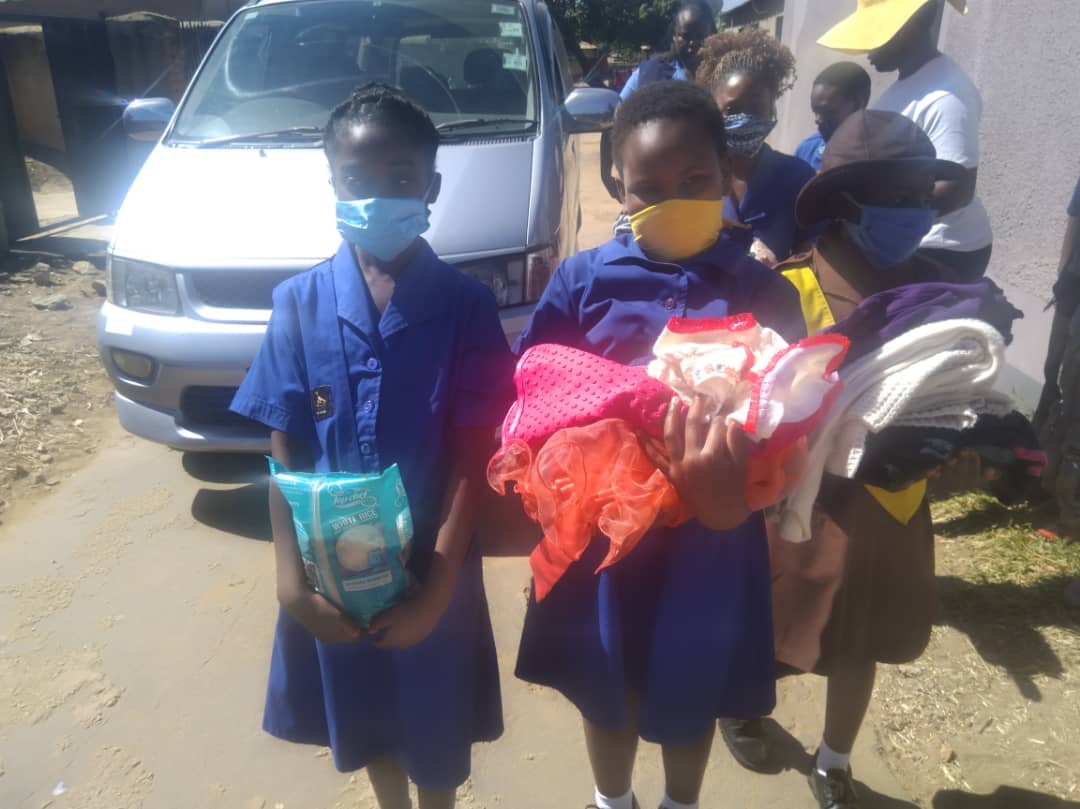
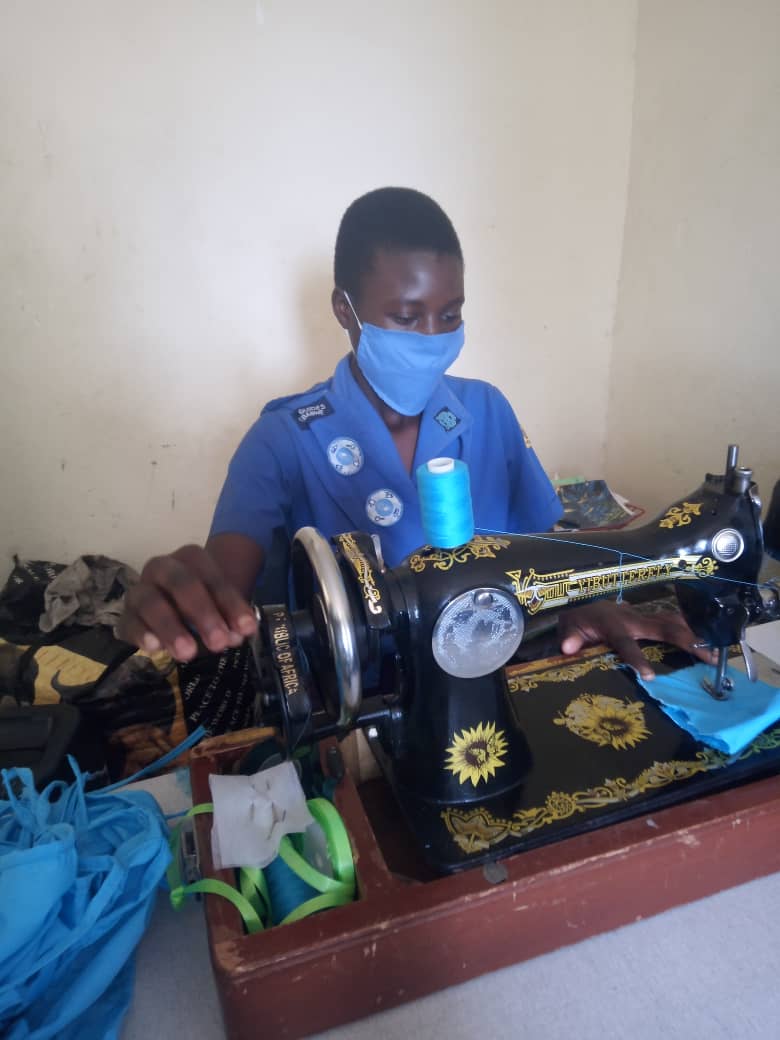
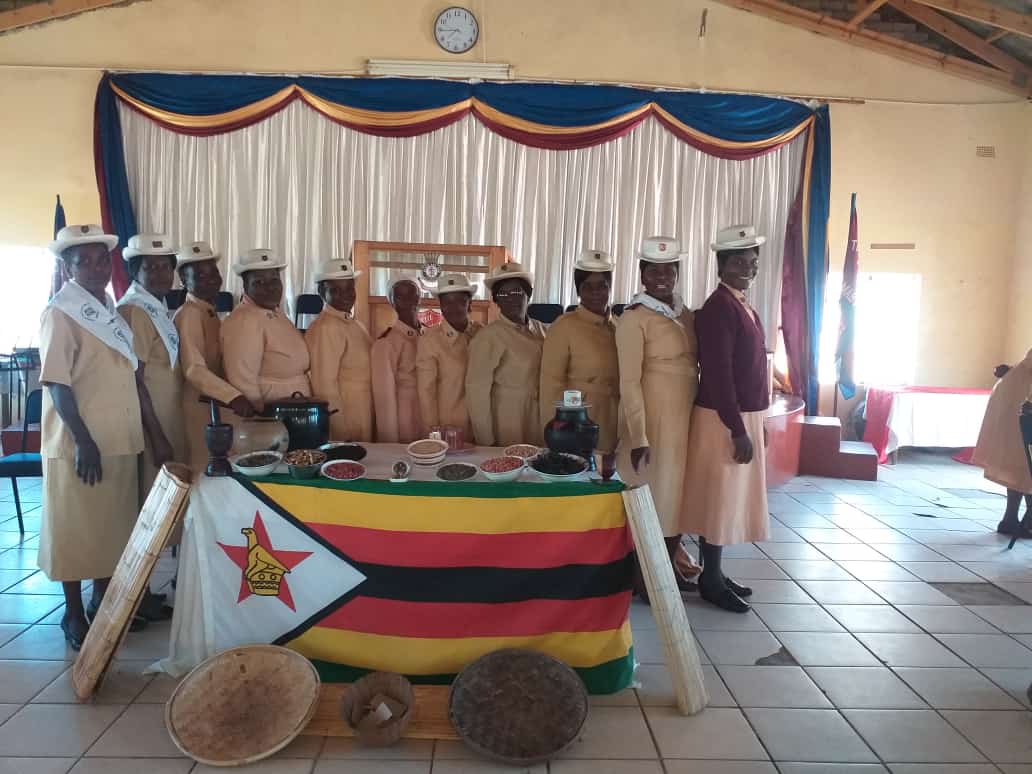
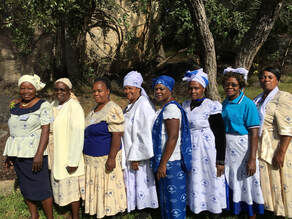 We really felt blessed and humbled to be the writer committee for the 2020 WDP worship service. The opportunities given by the collaborative writing process enriched us and let us grow in faith. One of the impacts of promoting the program as the focus country is that it united us. Women from different religious backgrounds, cultures and traditions came together under a common goal for the betterment of our country. It was a wonderful experience which required creativity. In the beginning, we found the theme motivational and a reminder that Christ would give us strength. However, as the days went by, the theme became more relevant, especially because of the COVID-19 outbreak. The theme sounded like a mandate, a mantra and certainly a way of life as the Coronavirus pandemic hit the nations in 2020. In Zimbabwe, the pandemic grouped together with the drought and the economic hardships made us feel that God was speaking directly unto our situation. Our people had to rely on Jesus Christ and His command to “Rise! Take Your Mat and Walk” towards the love and peace of God, which surpasses all understanding, and the reconciliation with the Holy Spirit, who brings healing and restoration to us all. Since the theme was defined in 2012, to the launch of the writing process through the Strengthening National Committee Workshop in 2016, and finally the moment of the celebration in 2020, the message has evolved. Really, God showed Himself to us. God is All Knowing. Our country and all others around the globe must indeed “Rise! Take Your Mat and Walk.” Notwithstanding the disruption in our calendar due to the pandemic, the children and youths were able to undertake a drama which was aired at the Zimbabwe broadcasting studio; they assisted with advertising on social media, sang and danced in the services. They were also involved in projects making sanitary pads, sewing face masks, crafts involving beadwork and donating food to those in need. Little girls from the Girl Guide movement also participated in the activities. These activities showed that all hope is not lost. The children acquired a good foundation as they learnt attitudes basic for their sense of humanity, which are caring for others and catering to their needs. This intergenerational exchange of skills also blessed us all. During the full WDP process as a writer country, we were reminded that despite the dark times, Zimbabwe is still part of a global village. We learnt to appreciate all that God has entrusted us to look after. We learnt a lot about our own country and how to love and embrace people from other religions, cultures, traditions and who speak different languages. We are all God’s creatures. Recently, we also learnt new things such as how to use video conferencing applications (e.g. Zoom) and other technologies to stay connected despite the lockdown due to Coronavirus. More significantly, all nations around the world took it upon themselves to pray for our country. The responses we got from other countries have encouraged us to engage and support other writer countries, thus we are more motivated with next year's program written by WDP women of Vanuatu. There was an overall excitement that took charge of the atmosphere around the world throughout the preparations and services. We heard very positive comments from different churches and organizations. They told us to “keep up the good work.” Others wished they were the ones leading the program. Some organizations indicated that they would like to join in the World Day of Prayer programs and projects. Every woman got involved, regardless of their tradition. There was a great sacrifice by the committee members for the whole program to sail through. To put the materials together with participants from different parts of Zimbabwe and with no access to social media to facilitate our communications was our biggest challenge. Thus, we created a steering committee to coordinate the promotion of the activities and formed sub-committees to help with the fundraising. People were highly supportive of the World Day of Prayer, and gave very good suggestions for the promotion of the activities; we even got support from people in the government. Sacrifice, commitment and dedication are key! Those who managed to attend the worship service before the government ordered a lockdown expressed their gratitude as they felt the service was heartwarming. They were encouraged to propel above injustice, hatred, violence and walk towards Love, Peace and Reconciliation. We look forward to engaging with more community outreach events while we build up and improve on the prayer journey that has already began. Through our ecumenical relationships, we developed partnerships to support the mothers and care givers of Ramangwana Ravo Trust, the Mucheke Old People's Home and Omni Village Rehabilitation and Skills Development Center. Also, it helped birth relationships that empower women to share ideas on how to manage challenges in life and be self-sufficient. This entire experience has reinforced how important it is to pray without ceasing for others and for ourselves. Without God we are unable to do anything. We depend on God for everything. God is God of the impossible. Is there anything too hard for God? - WDP Committee of Zimbabwe  The WDP Zimbabwe Committee's report was published in the 2020 WDP Journal. The Journal captures the lively presence of this worldwide ecumenical movement of informed prayer and prayerful action. Each country's story helps weave the wisdom and enthusiasm that the annual celebration generated in each part of the world. We invite you to view the Journal on our website and read the stories of this year's celebration.
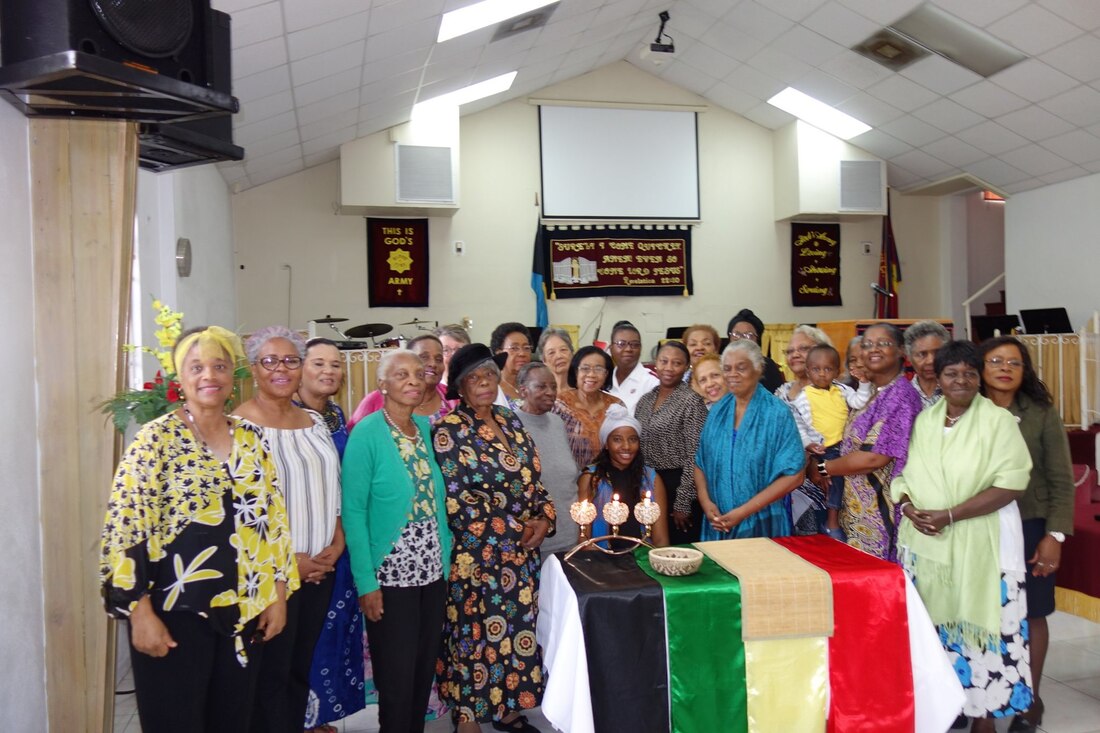
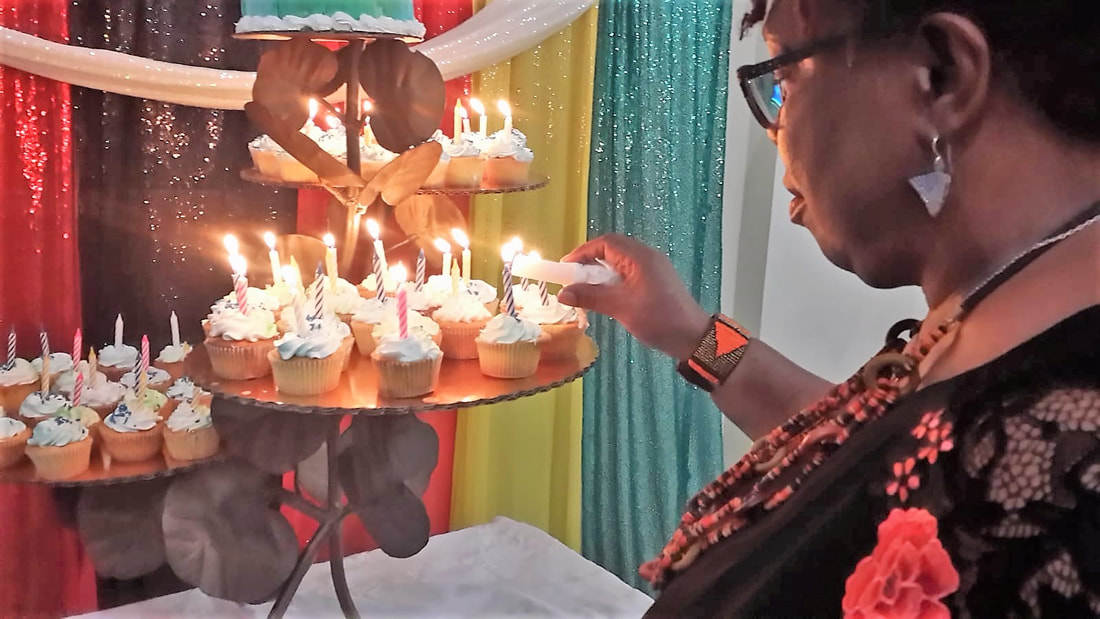
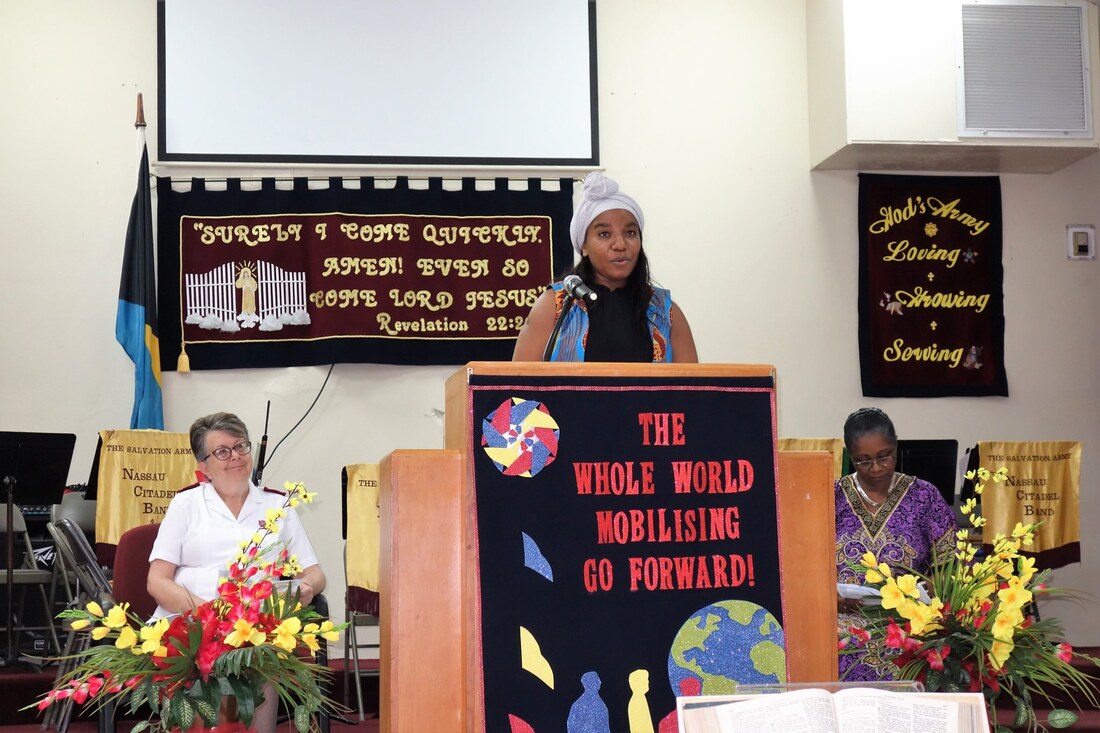
The Bahamas joined the World Day of Prayer movement in 1950 when the wife of a Presbyterian Minister in Nassau, invited the wives of ministers throughout New Providence to celebrate the day. The early services were held at the Presbyterian Church and later moved to other denominations and other islands. World Day of Prayer was celebrated on every island of the Bahamas in 2015, when our committee was tasked as the writer country and the world prayed for us and with us. Since 2015, five islands have continually observed WDP in schools and in ecumenical services. Our 2020 celebration was scheduled to take place on Cat Island, where we have the highest hill in the Bahamas, ‘Mount Alvernia’! This service was scheduled for the month following the annual service, and was to include women from every island! However, on March 15th, our country was shut down and international travel was prohibited, except for cases of emergency, due to the COVID-19 pandemic. It was providential that the WDP Committee of New Providence (Nassau) observed seventy years during the annual service in Nassau. At the conclusion of the prayer service for Zimbabwe seventy candles were presented, each candle standing in a large delicious homemade cupcake, and placed on a cake rack resembling a sea-grape tree. The beautiful six-tiered cake-stand was created by Tyrone Ferguson, whose artwork was used on one of our postage stamps in 2015. The cupcakes were made by Julia Burnside, a member of our committee and the daughter of Gertrude Burnside (also featured as our historian in 2015). On the table decorated for Zimbabwe stood nine large candles commemorating the lives of members ‘In Memoriam’ and these were lit by members of their families. Two of these candles represented the souls that perished in Abaco and Grand Bahama during Hurricane Dorian. The chairperson of the Abaco Committee traveled to Nassau for the service, and the former High Commissioner to the U.K lit the candle for Grand Bahama. A moment of silence was observed. On the top tier of the stand was one very large ‘sparkler’ candle, the last to be lit by all the children present. The first candle was an international candle, lit by Annette Poitier, WDP Bahamas President. Then followed three candles for Zimbabwe, lit by three ladies from Zimbabwe, followed by candles representing the region. We are fortunate to have committee members from Canada and the United States as well as from seven other Caribbean countries. The islands of the Bahamas and the denominations represented in our committees were all included and well represented. A great applause went up after the children lit the last candle, sending sparkles high into the air, and the band played, in calypso style, an old Bahamian New Year’s Eve chorus: ‘Thanks for another year O Lord!’ We danced, ate meals prepared by the Zimbabweans and of course we ate the cupcakes! After another half hour of greetings, dancing, and building fellowship, we left thanking our hosts and thanking God for the growth of our work in the Bahamas. - Annette Poitier, President of WDP Bahamas National Committee
 The miracle in John 5:1-9a is the second Jesus performed in his hometown. Jesus was attending a Jewish festival in Jerusalem and chose to visit this pool where so many who were crippled and disabled lay in wait beside the pool for the disturbance of the water in the expectation that it would heal them. Jesus hears of this man who has been languishing by the pool for 38 long years waiting for someone to just lift him and lead him to the pool. He walks up to him and asks him the most “ridiculous” question! “Do you want to be made well?” If I were a disciple, standing next to Jesus, I would have said “Come on Jesus, what kind of a question is that? Isn’t it a bit obvious that this person wants to be healed?” But we all know Jesus does not speak out of turn. There is a purpose behind his question. “Do you want to be healed?” We live in an Asian context where “fatalism” is almost a cultural trait. We have often heard people saying “Oh that is our fate” “You can’t question it. It was destined to be this way” – a sense of fatalism that has conditioned us to accept the bad things that happen to us. Jesus’ words shake this man out of this sense of lethargy and fatalism. There is no direct response from the man to Jesus’ question. He merely begins to complain. “There is nobody to lead me to the pool.” He does not expect or envision divine healing. He is only dependent upon the worldly form of healing. How like us who are always focused on our own way of thinking, materialistic and worldly. We have often heard of faith bringing about healing – the healing of Jairus’ daughter, the woman in the crowd who touched Jesus’ robe for healing - all these people demonstrated implicit faith and obtained healing through faith – but here, we find a story which does not talk about faith. This man did not know Jesus, he didn’t ask to be healed and did not demonstrate faith but he received God’s grace freely without any conditions. This episode shows us a different aspect of our God – God who sees our needs, who is filled with compassion and grants us unconditional healing. Jesus says “Rise! Take your mat and walk!” Three strong, clear commands. The Greek word for stand up or “rise” is egeiro, which also means “awaken”. Jesus urges the man to awaken into a new beginning, to awaken from his sense of victimhood, shed his disgruntled disposition and rise. That was his first step. But to just rise is not enough! “Take your mat…” The man was asked to roll up his mat. To us, the logical course of action would be to leave the mat behind! We would have said to him “Leave your mat, it tells your sordid stories” - but that is not what Jesus says. Why? The mat has been taken as a symbol in our service today. As such let us dwell on the significance of the mat in Jesus’ miracle. The man’s whole life and his sad story were woven around the mat. When Jesus urges him to take the “mat”, Jesus was reminding him that he had to be mindful of the way he had come. This is where the mat becomes symbolic – reminding us that the past that we have come through - although painful and full of strife – becomes a tool that transforms and strengthens us in our onward journey. Secondly, looking back at the way we came, assures us of God’s eternal grace, grace which is freely given. Looking back at our past reminds us to be always sensitive to the needs of others and helps us clothe ourselves in humility. After this man’s encounter with Jesus – the mat takes on new meaning and becomes a symbol that reminds him of Jesus’ healing. He is required to take up his mat - not a new mat - but the same mat woven with the sad stories of his past which has now become the mat of redemption, responsibility, the mat of remembrance of the loneliness that he had faced, which in turn makes him sensitive to the pain and suffering of others. What is Jesus’ third command? “Walk”. This is the healing in this story – Jesus restored the man into wholeness, Jesus empowers him to claim personal agency. He has gained his independence, regained assurance and now he has to ACT! “Walk”. Reading the letter of the Zimbabwean women and men in the worship service, we are brought close to them through their challenges, struggles and suffering because of poverty, separation, drug abuse, violence of all kinds. Mothers, wives and sisters await news of their family members who have been made to disappear; deaths due to HIV and Aids and domestic violence - situations similar to ours. We are all yearning for peace and a peaceful existence and striving for peace and reconciliation. Just as Jesus picked out this man in the multitude of crippled and sick people, he has seen and heard our cries and commanded us to arise, take our mats and walk. Let’s walk into the future with the faith and confidence that Jesus gives us out of the bounty of his grace. Jesus has seen our needs, healed us and summons us to walk on. By Shiranee Mills, an activist who worked hard in the North during the ethnic conflict in Sri Lanka. She served as Principal at a Christian girls school, and is currently retired living in Colombo. This reflection was part of the World Day of Prayer celebration on March 6th, in Sri Lanka.
 Photo by Bev Osterman, WDP 2020, Uniting Church, Melton, Victoria, Australia Today we celebrate the World Day of Prayer service bringing to mind the struggles of women across the world, especially our sisters in Zimbabwe. I want us to reflect today on ‘the Gospel according to the Mat’ (John 5:2-9a). So, welcome to the gospel according to the perspective of the mat! I am the mat… like the symbol received as you entered the chapel. I am the mat, on which the hero of our story lays for 38 years, waiting to be healed. I was with him waiting all along. I waited long enough to realize that I was not the magic carpet of Aladdin. Even after 38 years, I could not transport him to the magical pool when the water was disturbed by the mythical angel. I was not the only mat around. There were many of us holding those that the system had named as the ‘invalids’. In fact, literally speaking, we held the system in place. The system, which had successfully, made the people believe that there was only one solution to their problems. The system, which had made the suffering people competitors to one another in a context where compassion was needed instead. The system, where the blame for not being healed was placed on the sick people themselves. The Greek word for paralytic literally means ‘dried out’. This system had literally dried out both the body and spirit of my owner. Then, one day, something special happened. A young man appeared on the scene. He came to my owner and asked him to do something different. He did not ask him to compete against the others, or get down to the pool first, but instead asked him to rise, take up his mat and walk. By asking my owner to take up the mat – this young man, whose name was Jesus, was asking my owner to give up the very system he had believed in and relied on for the past 38 years. He was asking him to courageously embrace a new way of living - a way that was not dependent on the system or its brokers. Once my owner acted upon his words, I ceased to be a symbol of the system that kept him dependent and enslaved. I became a symbol of transformation. It was time for me to be folded up and carried away. Folding me up and tucking me under his shoulders was like bidding goodbye to the system. It was interesting that the man, who healed my owner, did not ask my owner to abandon me by the poolside. Instead he was to carry me around – as a sign of transformation. I was no longer the sign of bondage; I was a living sign of liberation and freedom. That is the point I want to make today – many of us who are often thought to be part of the system can also become the signs of its transformation. Let me explain more. When people saw me folded up in the man’s hand – they saw it as a sign that the structure had been changed. So, they started questioning - who is responsible for this? How could this change happen now? I realized that I had become almost a teaching tool. This was the way that Jesus, the man who healed my owner, brought about transformation. He often did things which provoked people to examine their own beliefs and way of life. His acts of healing became a moment of teaching – a moment of questioning the system through the eyes and ears of those who were most oppressed by it. I know you are not here today to hear a silly mat speak to you. Today I want to draw your attention to many other living mat in our world, who from being symbols of an enslaving system have been transformed into signs of transformation. Whose lives have become teaching tools like the folded mat? One story I want to share is that of the Women of Zimbabwe Arise, or WOZA campaign. The WOZA campaign is a civic movement which emerged to provide women with a voice and visibility to foster change in Zimbabwe. This movement uses a campaign of “tough love,” using the traditional role and moral authority of a mother, calling for a new kind of society where equality and social justice prevail. What is interesting about the campaign is how the women transformed their time under arrest, as a chance to educate others about human rights and correct those in positions of power who are harassing the people. With demonstrations of love— WOZA women provide the nation with a new way to hold policymakers accountable. Today, we remember all such living mats that standout as symbols of transformation. We need to ask ourselves about how often have we become a part of enslaving structures. We need to remind ourselves of the urgency in becoming signs of transformation. Today the words of Jesus Christ, to the crippled man come to us afresh -- Arise, take up your mat and walk. The time to act is now. Let us rise in faith, lift up our mat in hope and walk in love. Amen. Written by Rebecca Sangeetha, a theologian and a New Testament scholar. She loves to do contextual interpretations of the Biblical stories through the eyes of a woman, especially Dalit women, marginalised communities of women, men and children. A graduate of the United Theological College, Bangalore, and the King’s College London (M.Phil.), she currently works at the Lutheran World Federation, Geneva, Switzerland, and belongs to the Tamil Evangelical Lutheran Church, India. This reflection was delivered on the World Day of Prayer celebration, March 6th, at the Ecumenical Centre chapel in Geneva.
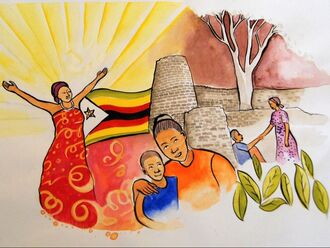 As we get closer to what we have been preparing with enthusiasm and creativity, the voices of the women from Zimbabwe, intertwined with our own, bring alive a message of love, peace and reconciliation. The WDP women of Zimbabwe invited us to pray with them. Many communities gathered together to deepen their reflection on the theme based on the story of John 5, 1-9a. The three verbs - “Rise, Take and Walk” – indicate action. Jesus used those verbs on two occasions: to a sick man (John 5) and to the paralyzed one carried by four other men (Mark 2). The verbs indicate the change for those in the stories. These verbs are still powerful for us, today! Our Zimbabwean sisters showed us the way. “Jesus empowers us to be made well by doing something for the transformation that God is offering—to rise and take up our mat, whatever that may be for us, and walk. Jesus empowers us to choose to be healed, to be made whole, perhaps physically, mentally, spiritually, and socially. When we are made whole, we are reconciled to God, to ourselves, and to our community. When we are reconciled, we can truly love, and when we truly love, we are able to walk toward peace. So, “Rise! Take your mat and walk.” (Extracted from the Worship Service 2020) “WDP encourages responsible action that grows out of the worship service” (WDP Guiding Principles, 9, b). What are the actions that the worship service will inspire you to take? In that way, WDP will fulfill its motto “Informed Prayer. Prayerful Action.” We join you, and especially the people of Zimbabwe, in prayers for the Holy Spirit to be at work in our hearts, so we can feel the push that makes us Rise, Take and Walk! We wish you a blessed and happy feast! Laurence Gangloff, WDPIC Chairperson & Rosângela Oliveira, WDPIC Executive Director
 How does World Day of Prayer tell the story of united prayers led by women around the world? For almost 100 years, women have been inviting the communities to listen to each other and to create common responses to help the ones in need.
The themes that motivate the prayers since 1927 up to 2026 are a testimony of how women commit to putting their hope into action. From the 1927 service entitled “Pray Ye Therefore”, written by Mary Hough, USA, to the 2020 service written by women in Zimbabwe under “Rise! Take your Mat and Walk”, we underscore our way of being active listeners to foster ecumenical solidarity. The faces of the communities in prayer around the world are displayed on the WDP Timeline poster, released in 2018. They represent the prayers that come from Samoa, Zimbabwe, Lebanon, Uruguay, Hungary, Taiwan and Bahamas (from top left to bottom right). Let’s learn the stories behind the faces! 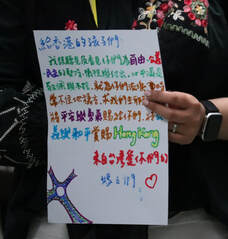 Prayer letter from Taiwanese mothers to 2019 Hong Kong youth protesters. Prayer letter from Taiwanese mothers to 2019 Hong Kong youth protesters. Taiwan was selected as the writer committee for World Day of Prayer (WDP) 2023 during the WDP International Committee Meeting, which was convened on August 20-27, 2017, in Foz do Iguaçu, Paraná, Brazil. After two preparatory workshops, which will be led by Rev. Rosângela Oliveira, Executive Director of WDPIC, the worship service materials will then be prepared ecumenically, collectively and with grassroots women from 2019 until September 2021. The first of the proposed workshops, a Strengthening National Committee Workshop, took place from December 4 to 6, 2019 when more than 30 participants gathered at Our Lady of Providence Girls’ High School, New Taipei City, Taiwan. Local participants included women and young women from the Catholic Church (Taiwan Catholic), Yu-Shan Theological College & Seminary, Women's Prayer Group, the Mustard Seed Mission, the Salvation Army, the Methodist Church (Taiwan), Chang Jung Christian University (CJCU) School of Theology, YMCA of Taiwan, YWCA of Taiwan, Taiwan Lutheran Church, Taiwan Theological College & Seminary, the Garden of Hope Foundation and the Presbyterian Church in Taiwan (Presbyteries/Districts). Through various creative activities and dialogue, the three-day workshop aimed to strengthen fellowship, to build relationships, and to “brainstorm” concerning the worship service materials for WDP 2023. During the opening worship, Rev. Rosângela briefed the participants on the historical roots of the World Day of Prayer and how the seed was planted. In the nineteenth century, Christian women in North America were moved to action when they saw the suffering of women around the world and in their own communities. They were active letter writers, and so they wrote letters and called for united prayer and action in solidarity with women across the globe. About 100 years later in Taiwan, more than 30 participants from various denominations were challenged to write letters for the preparation of WDP 2023 under the theme "I have heard about your faith" (Ephesians 1:15). Following a Bible Study summarizing the background of the book of Ephesians, led by Rev. Dr. Wu Fu-Ya, former President of Tainan Theological College and Seminary, (Rev. Wu incidentally was the first female ever appointed as a principal of a theological institution in Taiwan!), the participants were asked by Rev. Rosângela to think deeply about their reaction to the theme. "What is it that you have heard about her/his/their witness of faith and love?" In small groups, the participants wrote down their letters according to the structure of Ephesians 1:1, 15-16, and 17-18. Their letters touched various levels and showed their concerns about personal health conditions, the Pearl Family Garden*, the Presbyterian Church in Taiwan (PCT)’s mission, the 2019 Hong Kong protests, and so on. Through this activity, the participants expanded their vision and identified specific categories: Women and Family, Women and Politics, Women and Health, Women and Environment, Women and Culture, and Women and Leadership. Based on the different categories, the participants began to think deeper about "What are the prayers and actions that women in Taiwan want to voice in 2023?" During the discussion of Women and Environment, Vavauni Ljaljegean, a Paiwanese Evangelist from Mu-Lin church in Pingtung, Taiwan, told the participants a heartbreaking story. After Typhoon Morakot, a three-day rampage from August 6 to 9 in 2009, the elder Indigenous people who lost their homes and relocated in the plains took their own lives due to difficulties adjusting to an unfamiliar environment. When it came to Women and Leadership, it was agreed that promoting equal representation of women in decision-making is important; however, the participation of women in leadership roles in Taiwan is still lacking and has a long way to go. Nancy Lin, former WCC Central Committee member (PCT), encouraged the participants to step up, lead and speak up. For the closing worship of the WDP Taiwan SNC workshop, on the third and final day, the workshop participants used the materials of the Zimbabwe 2020 WDP program under the theme “Rise! Take Your Mat and Walk” (John 5:2-9a). May all the acts and efforts glorify God and let the voices of Taiwan be heard – we now look forward with enthusiasm to the second workshop! By 陳怡婷 (Rachel Chen, PCT Information Center Staff) and Carys Humphreys, Administrative Assistant to the PCT General Secretary *Pearl Family Garden’s mission is to bring the gospel to women in prostitution and to mobilize the church for missions in the red-light districts of Taiwan.
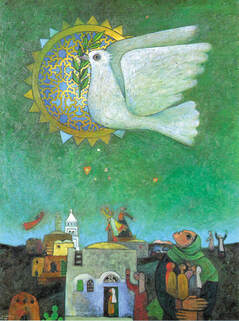 1994 artwork for WDP Palestine 1994 artwork for WDP Palestine Coming from the land and city where the miracle in John 5 took place, gives me a special responsibility to share my reflection on the Zimbabwe theme “Rise! Take Your Mat and Walk” and what prayerful action really means. How will we walk? The site of the Bethesda pool still exists today as proof of the belief of people who were healed or hoped to be healed when and if the angel stirred the water. The site is part of the buildings where the church of St. Anne, traditionally the home of the Virgin Mary’s parents, stands. To reach the building, you still have to pass through the Sheep Gate, also known as the gate of the twelve tribes and that of St. Stephen, who was stoned in Jerusalem. This is one of the seven gates that lead into the Old City, the Via Dolorosa, the 14 Stations of the Cross and the Noble Sanctuary, the Dome of the Rock, holy to Muslims. After all Jerusalem is where the three monotheistic religions, Judaism, Christianity and Islam meet. Since 1967, this gate is guarded by heavily armed Israeli soldiers who allow or deny entry to both local and pilgrims depending on circumstances or the soldiers’ whims. In Jerusalem where crowds of sick people, blind, lame and paralyzed gathered around the pool awaiting to be healed, people today push and shove trying to flock in to visit holy sites and to praise God. As women followed Jesus on the same path to the cross, mothers, wives, sisters and daughters walk without losing hope. We, the World Day of Prayer Palestine Committee wrote about this in the 1994 service “Go, See and Act” and invited our sisters around the world to walk with us in prayerful action. Like the lame man afflicted for 38 years, the Palestinian people have been waiting for almost a century for an angel to remove the yoke of oppression imposed upon them, and women are still striving for their equal rights. In answer to the question posed by Jesus: “Do you want to be well again?” We cry out: “Of course! But how can we when there is injustice, oppression, hatred and killing in your land? The land of Jesus has not known the peace he announced nor lived the message of love and equality among brothers and sisters! Please, Jesus, heal us and walk with us so that humanity can be restored.” When Jesus tells us: “Get up, pick up your sleeping mat and walk around” we respond: "Even if individually we do try to stand up and bring harmony within our own circles, the work of your peacemakers is not yielding fruits. We need the massive efforts of good people who believe in human beings, who do the will of God and are supported by global moral values and international law." So, I offer this prayer: With your help, O Lord, shake off the injustice, remove the occupation, liberate us, as you announced in the synagogue in Nazareth, so that we can walk as your children created in your divine image. We feel that under the oppressive system, we are not allowed to carry our sleeping mat, to walk freely and to have a state of our own. Dear God, who created us in your divine image and gave us our dignity, help us to resist, nonviolently, against all forms of humiliation and dehumanization imposed upon us. Help us to respect others and to follow the commandment of do not kill, morals which have disappeared in the hearts of leaders in your country and the world. Heal us, O lord, teach us humility and grant us the gift of reconciliation, so that we can all walk together with love. We, women of the World Day of Prayer have our differences, but we all care for God’s beautiful creation and want to preserve it. Let us learn from each other, and spread love among all, for we women can be more powerful with compassion. Amen. - Nora Carmi, WDPIC Regional Rep. of the Middle East
When we were chosen to write the WDP worship service for 2018, we did not anticipate the powerful impact that being a writer country represents. We were honored and humbled by that realization. We were enthusiastic about having the whole world pray for our country; a country hardly known. We had the great responsibility of lifting up the care for creation, for the sustainability of our planet and the future of the next generations. The offerings we received were shared with projects and organizations we partnered with to make a difference in our communities. For the Wildlife Protection all animals have their own value and are worthy of being treated with respect as independent beings. They aim to save and protect animals by treating them well, respecting their freedom and raising awareness about their integrity. They advocate proper care for domesticated animals, conservation of natural wildlife habitats and proper living conditions for animals held in captivity. The Unu Pikin Foundation has been committed to improving children’s education since 2003. Assistance and extra care is given to those with disabilities. Their book department sells and offers free books for schools and other institutions. Stop Violence Against Women Foundation actively contributes to the prevention and combat of domestic violence against women. Together with the government they take a prominent role in developing and influencing national policy for gender equality. The Wi Oso Foundation teaches those who are disabled to grow and sell their plants and vegetables. Care for Moms is a project dedicated to offering support and guidance to women with breast cancer. Huize Albertine is a home for the elderly and Hope for Children is a shelter home for abused and abandoned children. There were many lessons to be learned. The first one was that we, as women, do have a powerful contribution to make to the world. With God as our guide, we came together to bring the necessary changes to our communities. We came out of that WDP experience with a vision for the future of our committee. It felt wonderful to be in prayer with our people and the people around the world! - WDP Suriname Committee
|
Archives
April 2025
Categories
All
|
||||||

 RSS Feed